
Quick Read
- Canopy Growth stock spiked nearly 18% on Dec. 15, 2025, after reports of possible U.S. federal marijuana rescheduling.
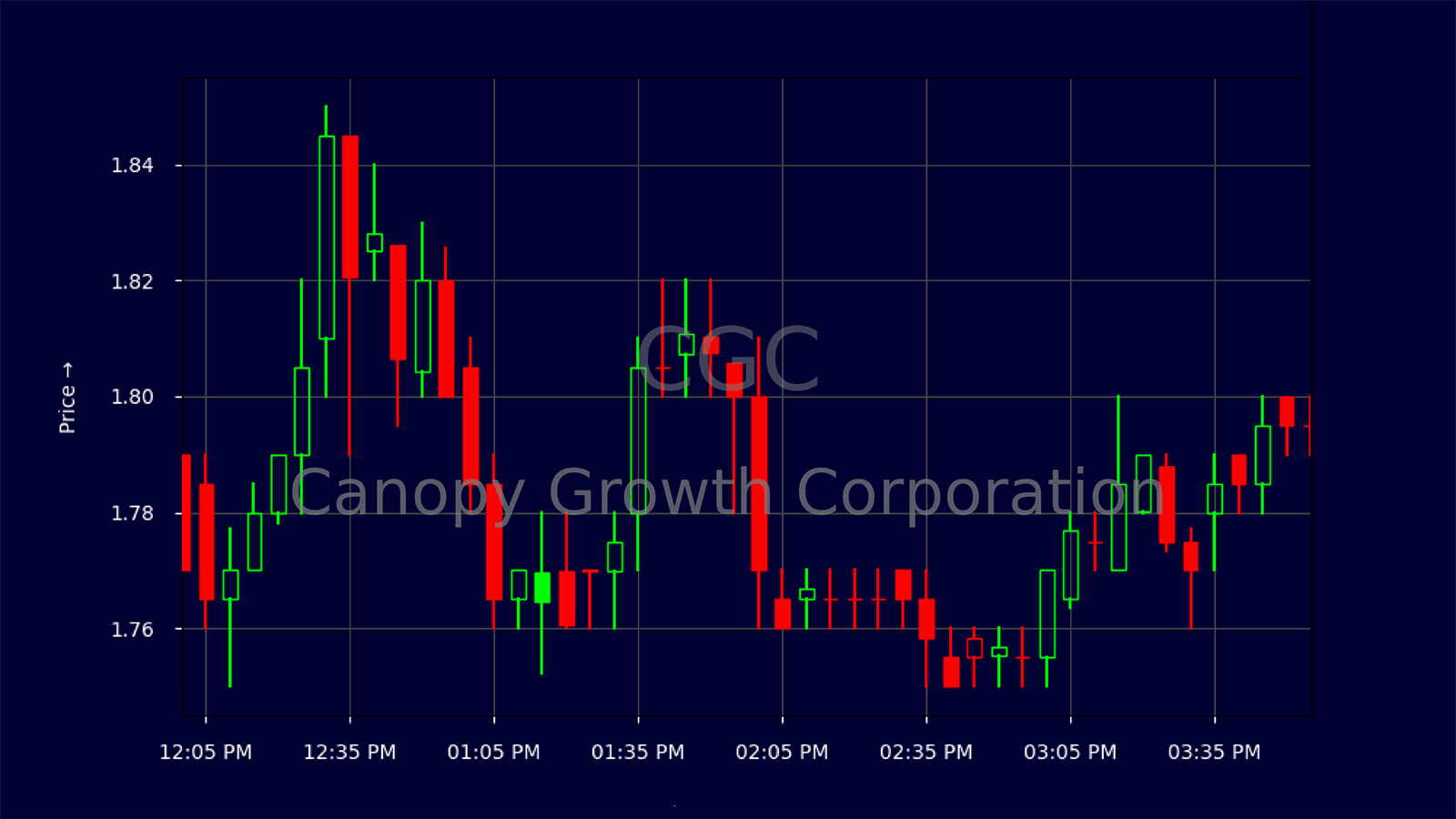
- The rally was short-lived, with the stock closing down 4.02% that day amid high volatility and intraday swings.
- A Schedule III reclassification could ease tax and financing pressures but doesn’t guarantee federal legalization.
- Canopy’s financials show improving Canadian revenues and aggressive debt reduction, but profitability remains elusive.
- Analyst sentiment is neutral, with a consensus ‘Hold’ and wide target price range reflecting ongoing uncertainties.
- Canopy Growth stock soared by as much as 17.9% on Dec. 15, 2025, following reports that President Trump may reschedule marijuana to Schedule III.
- The stock closed at $1.66, down 4.02% after intraday swings between $1.63 and $1.88, showing extreme volatility.
- Potential U.S. federal rescheduling could ease tax burdens and improve financing for cannabis companies, but no official decision has been made yet.
- Canopy’s financials show modest revenue growth in Canada, ongoing losses, and aggressive debt reduction strategies.
- Analysts remain cautious, with a consensus “Hold” and wide target price dispersion, reflecting regulatory and profitability uncertainties.
Trump Policy Rumors Ignite a Frenzy in Cannabis Stocks
On December 15, 2025, Canopy Growth Corporation (NASDAQ: CGC; TSX: WEED) found itself back in the limelight. The spark? Reports that President $1 Trump may soon reclassify marijuana as a Schedule III drug under U.S. law. The mere suggestion of this policy shift sent shockwaves through cannabis stocks, with Canopy leading the charge—rallying nearly 18% in early European trading, then plunging by day’s end as reality and rumor collided (Reuters).
It’s a pattern familiar to seasoned cannabis investors: news of federal reform, followed by a sector-wide squeeze, wild trading volumes, and then the inevitable question—how much of this is real policy momentum, and how much is market adrenaline?
Decoding the Rally: Hype vs. Real Impact
Friday, December 12, had already seen Canopy Growth close up nearly 54%, with more than 157 million shares changing hands—a massive spike. By Monday, the buzz grew louder as Reuters and Barron’s reported that Trump’s rumored executive order could soon move marijuana from Schedule I to III. If true, this would ease some federal regulatory constraints, particularly regarding U.S. tax policy and banking restrictions.
The appeal is clear: Rescheduling could finally allow cannabis businesses to deduct normal business expenses under IRS Section 280E, a change that would ease a critical financial choke point. It might also unlock new financing and bring institutional investors off the sidelines, as TD Cowen analysts told Reuters. But here’s the catch—no official decision has been made. A White House official, as quoted by Barron’s, cautioned that nothing is final yet. For traders, that caveat is everything.
What a Schedule III Shift Would—and Wouldn’t—Change
If marijuana is reclassified to Schedule III, the regulatory burden would ease, but it’s not a magic bullet. Cannabis would not become federally legal for recreational use overnight. State-by-state market fragmentation would persist, and the nitty-gritty of implementation could take months or longer—dependent on agency rulemaking and political headwinds.
Still, for companies like Canopy Growth, it would be a structural catalyst. The company’s U.S. exposure—via non-controlling interests in Canopy USA, Acreage Holdings, and brands like Wana and Jetty—means any federal policy shift could directly impact its asset values and strategic options. That’s why Canopy trades like a high-beta proxy for U.S. reform hope, even though it’s not a classic American multi-state operator (Business Wire).
Financial Reality Check: Growth, Losses, and Debt Reduction
Beneath the policy-driven volatility, Canopy’s fundamentals are a study in cautious optimism. The latest earnings (Q2 fiscal 2026, ended Sept. 30, 2025) showed:
- Canada adult-use cannabis net revenue up 30% year-over-year, to $24 million
- Medical cannabis revenue in Canada up 17%
- Cash and equivalents at $298 million, exceeding debt by $70 million
- Adjusted EBITDA loss narrowed to $3 million (canopygrowth.com)
But there are clouds on the horizon. According to StocksToTrade, overall revenue for the quarter was $66.68 million, a slight downturn from prior quarters. EBITDA remained negative at -$1.71 million, and persistent negative margins continue to shadow the company. Cash flow tells a mixed story: $17.68 million raised from asset sales, but $70.74 million used for debt repayment. The company’s healthy current ratio of 5.5 and working capital of $364.71 million signal short-term stability, but long-term profitability remains elusive.
To its credit, Canopy has been aggressive about debt. In September 2025, the company prepaid $25 million on its senior secured term loan, with $50 million in aggregate prepayments expected to save $6.5 million annually on interest (Business Wire). In a sector plagued by high-cost capital, every penny saved is a lifeline.
Market Mechanics: Short Squeezes and Options Mania
The wild swings in CGC’s price weren’t just about policy headlines. MarketBeat reported a short interest of 43.56 million shares (over 18% of the float) as of mid-November—priming the stock for a classic short squeeze as traders rushed to cover positions. Options activity surged as well, with call volume spiking 77% above daily averages. When so many bets stack up on one side, even a hint of regulatory change can trigger an outsized move.
Analysts: Cautious, but Not Counting Canopy Out
Despite the fireworks, Wall Street’s verdict is: wait and see. MarketScreener lists a consensus “Hold” from five analysts, with price targets ranging from 1.40 to 8.00 CAD—reflecting just how sensitive cannabis valuations are to regulatory assumptions. Investing.com paints a similar picture: muted optimism, tempered by the realities of negative margins and volatile revenue streams.
The reality is that for every investor betting on a U.S. reform jackpot, there’s another keeping one eye on liquidity, dilution risk, and the sector’s penchant for wild reversals. As StocksToTrade’s Tim Bohen puts it, “Preparation is half the trade.” Traders who survive this space do so by planning ahead, not chasing every headline.
Risks: Policy Uncertainty and Financial Tightrope
The December rally is real, but so is the risk of disappointment. Cannabis stocks are notorious for giving back gains when legislative timelines slip or details disappoint. Policy uncertainty, dilution risk from potential equity raises, and the gap between momentum and fundamentals all loom large.
For Canopy, the next major checkpoint is its Q3 FY26 earnings, tentatively set for February 6, 2026. Until then, the stock will likely trade on a knife’s edge—caught between hopes for U.S. reform and the hard numbers coming out of its Canadian and medical divisions.
Assessment: Canopy Growth’s recent surge is a vivid reminder of how tightly cannabis stocks are tethered to U.S. regulatory headlines. Yet, the fundamentals tell a story of a company fighting to stabilize, not yet thriving. The path forward will depend as much on actual policy changes as on Canopy’s ability to turn operational improvements into real, durable profitability. For investors, separating the signal from the noise remains the toughest trade of all.